

There is absolutely nothing wrong with a big green salad. But sometimes another container of lettuce just isn’t what you want to see when lunchtime rolls around.
That’s where these non-lettuce salads come in.
We’re talking pasta salads, quinoa salads, chickpea salads, potato salad, crunchy broccoli salad, chicken salad, lentil salad, and more. Some include sturdy greens like kale or spinach, but lettuce isn’t doing all the work.
And that distinction matters for meal prep.
One thing I’ve learned from meal prepping over the years is that a good make-ahead salad needs more than a great dressing. It needs ingredients that can handle spending a few days in the fridge without turning into something you no longer want to eat. Pasta, grains, beans, roasted vegetables, cabbage, broccoli, kale, nuts, seeds, and sturdy fruit tend to give you a lot more wiggle room.
You also don’t have to prep five identical salads and commit to eating one every day. Make one recipe for a few lunches, use another as a dinner side, or prep the sturdy ingredients now and assemble the rest later. Meal prep is supposed to make your week easier, not give you another set of rules to follow.
Here are 13 salads that prove lettuce is only one way to do salad.
What Makes a Salad Good for Meal Prep?
When we develop meal prep recipes, I’m not just thinking about whether they taste good immediately after they’re made. I also care about what happens on day two or three.
For a salad, texture is usually the deciding factor.
Ingredients like quinoa, pasta, chickpeas, lentils, roasted squash, broccoli, kale, nuts, seeds, apples, and dried fruit can hold their own in the fridge. Delicate greens, sliced avocado, croutons, and very juicy ingredients often need a little more strategy.
My favorite rule is simple: separate whatever is most likely to get soggy.
Sometimes that’s the dressing. Sometimes it’s a crunchy topping. Sometimes it’s sliced fruit or avocado.
You don’t need six tiny containers for every lunch, either. Separate only what actually benefits from being separate.
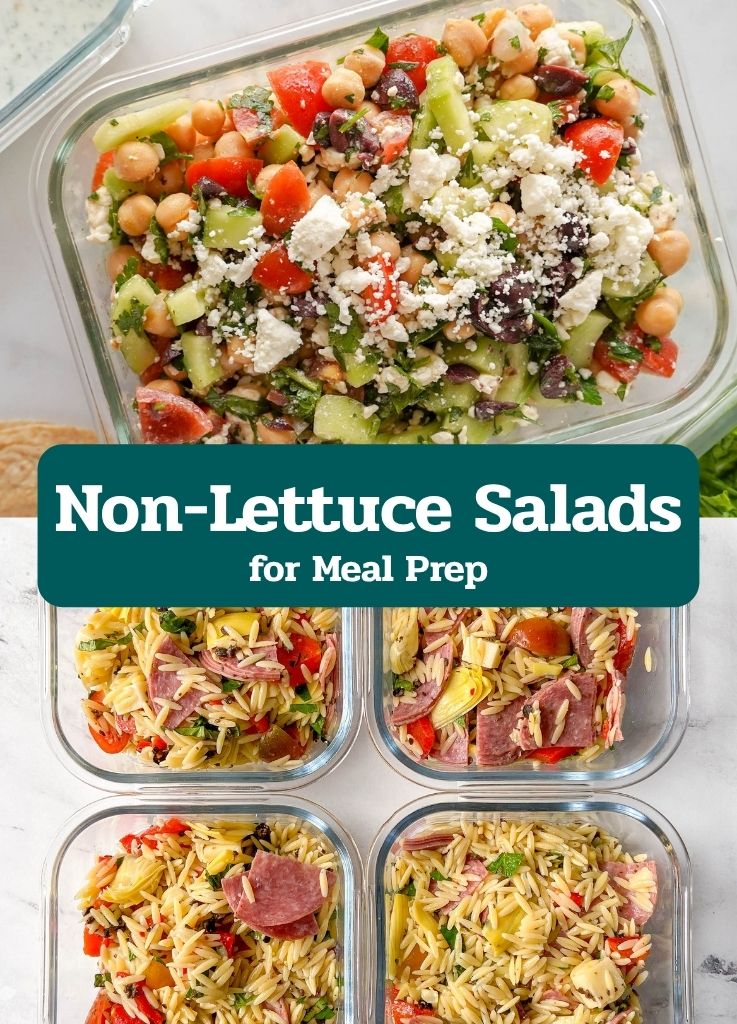
1. Meal Prep-Friendly Antipasto Pasta Salad
If cooking motivation is running low, start here.
Our Meal Prep-Friendly Antipasto Pasta Salad combines orzo with the salty, tangy ingredients you might find on an antipasto platter, including jarred and canned ingredients that make this especially useful for low-energy prep days.
That pantry-friendly approach is one reason I keep coming back to this style of recipe. Meal prep gets much easier when every recipe doesn’t require a cart full of fresh ingredients and an hour of chopping.
You can also customize it based on what’s already around. Roasted peppers, artichokes, olives, cheese, or other antipasto favorites can all help you use up odds and ends instead of buying ingredients for one specific purpose.
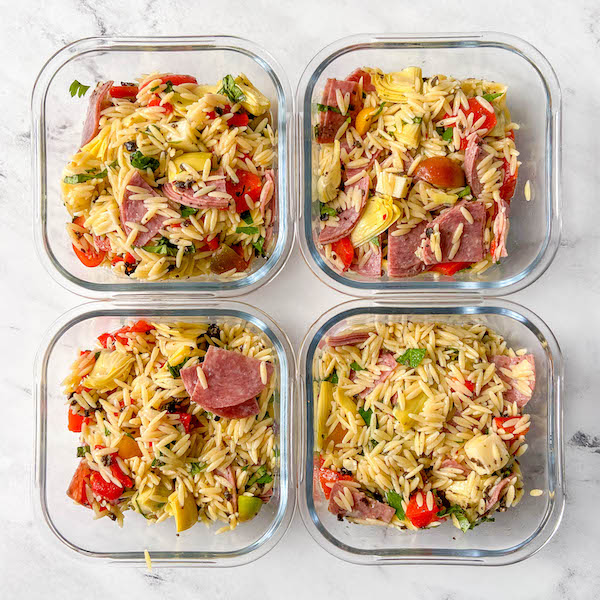
Why I like it for meal prep: You only have to cook the pasta, it works cold or at room temperature, and sturdy antipasto ingredients hold up well in the fridge.
2. Green Tuna Pasta Salad
This Green Tuna Pasta Salad is the recipe that made me reconsider tuna pasta salad entirely.
The combination of pasta, tuna, asparagus, herbs, and a flavorful green sauce makes it feel much fresher than the heavy versions people sometimes associate with tuna salad.
It’s also an excellent “use what you have” recipe. Broccoli or green beans can step in for asparagus, and the sauce is a great destination for herbs that are getting close to the end of their useful life.
That last part is worth paying attention to. Some of my favorite meal prep recipes aren’t just convenient because they make lunch—they’re convenient because they help prevent half-used ingredients from quietly disappearing into the back of the fridge.
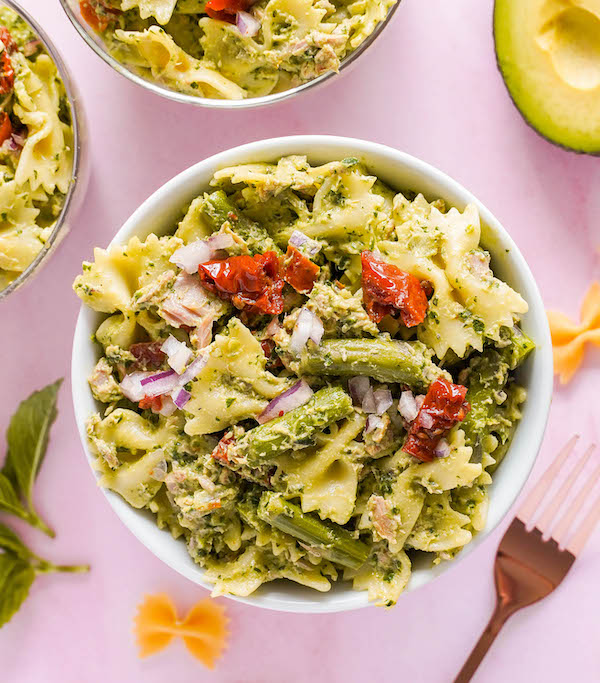
Meal prep shortcut: Cook the pasta and blanch the vegetables at the same time if your setup allows it. Fewer pots and fewer steps usually means you’re much more likely to make the recipe again.
3. Quinoa, Kale, and Butternut Squash Salad
This Quinoa, Kale, and Butternut Squash Salad is one of those salads that feels just as appropriate at a fall dinner as it does packed into a work lunch.
It combines roasted butternut squash, quinoa, chickpeas, kale, dried cranberries, pepitas, feta, and a honey-balsamic dressing.
The reason this combination works so well for meal prep is texture. Kale is much sturdier than delicate salad greens, quinoa doesn’t mind hanging out in the fridge, and roasted squash still tastes good warm, cold, or at room temperature.
It is also extremely swap-friendly. Try another winter squash, change the quinoa to farro or couscous, swap the chickpeas, or use a different cheese.
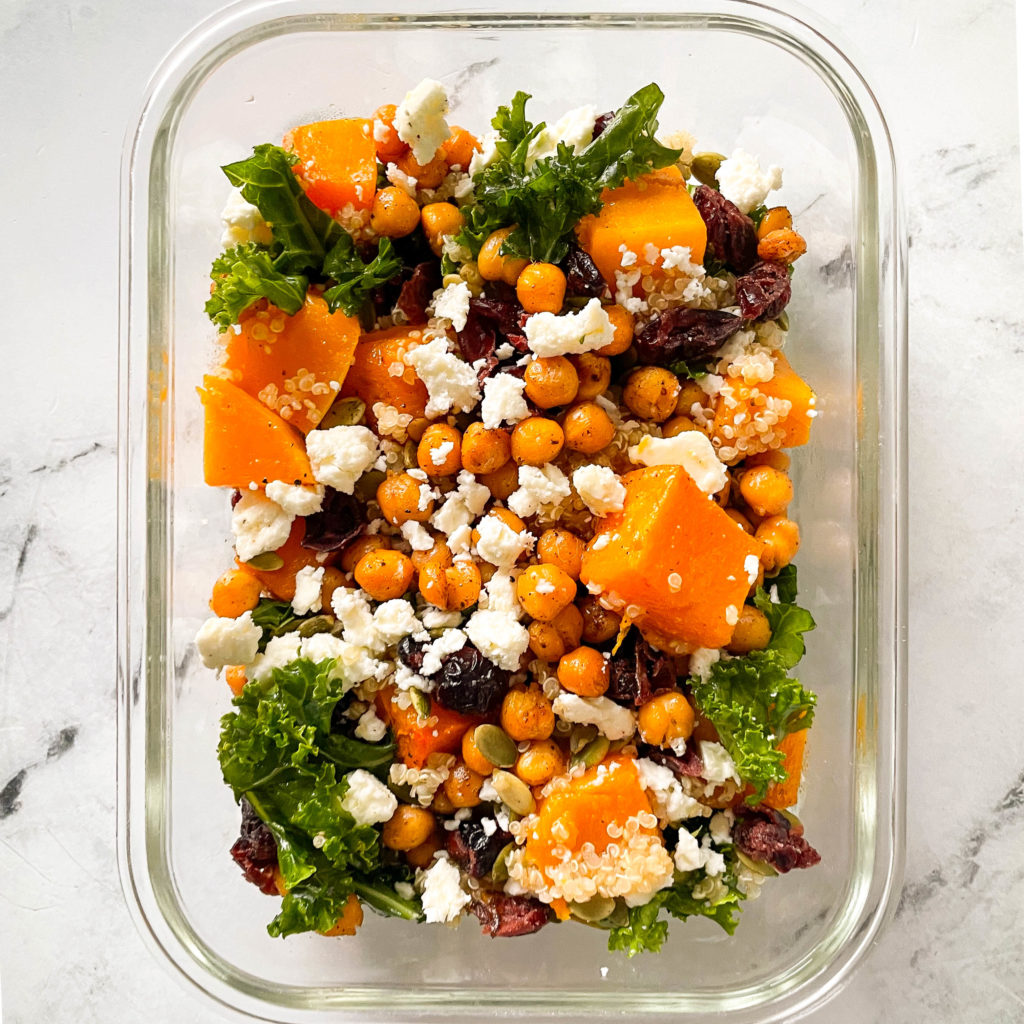
The step I wouldn’t skip: Massage the kale. A little oil and a minute of massaging changes the texture significantly and makes it much more pleasant to eat later.
4. Chicken Waldorf Salad With Quinoa
Traditional Waldorf salad typically revolves around apples, celery, grapes, walnuts, and a creamy dressing. Our Chicken Waldorf Salad With Quinoa takes the concept in a more substantial meal-prep direction.
Chicken and quinoa turn it into a full lunch, while apples, grapes, celery, and walnuts bring plenty of crunch and contrast. This version also skips the traditional mayo-based dressing and uses blue cheese and lemon for creaminess and tang.
I especially like salads like this for people who say they don’t really like salad. There isn’t a pile of lettuce you’re working your way through. Every bite has a mix of textures and flavors.
You can also tuck the mixture into a pita, turn it into a sandwich, or serve it over greens if that sounds good that day.
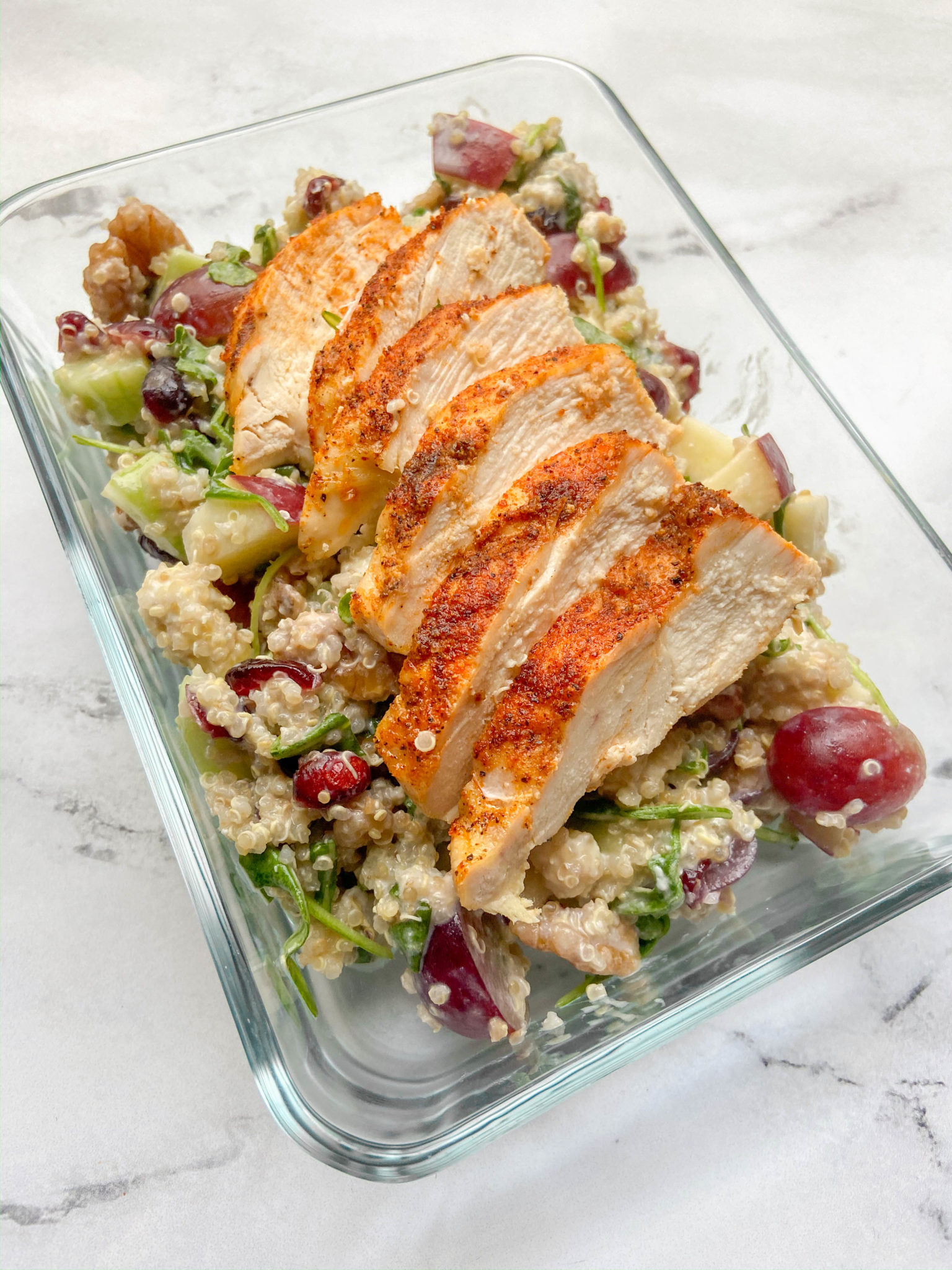
That flexibility is very WWL: prepping one thing doesn’t mean you have to eat it exactly the same way every time.
5. Basil Lime Chicken and Peach Kale Salad
A non-lettuce salad can still have plenty of greens.
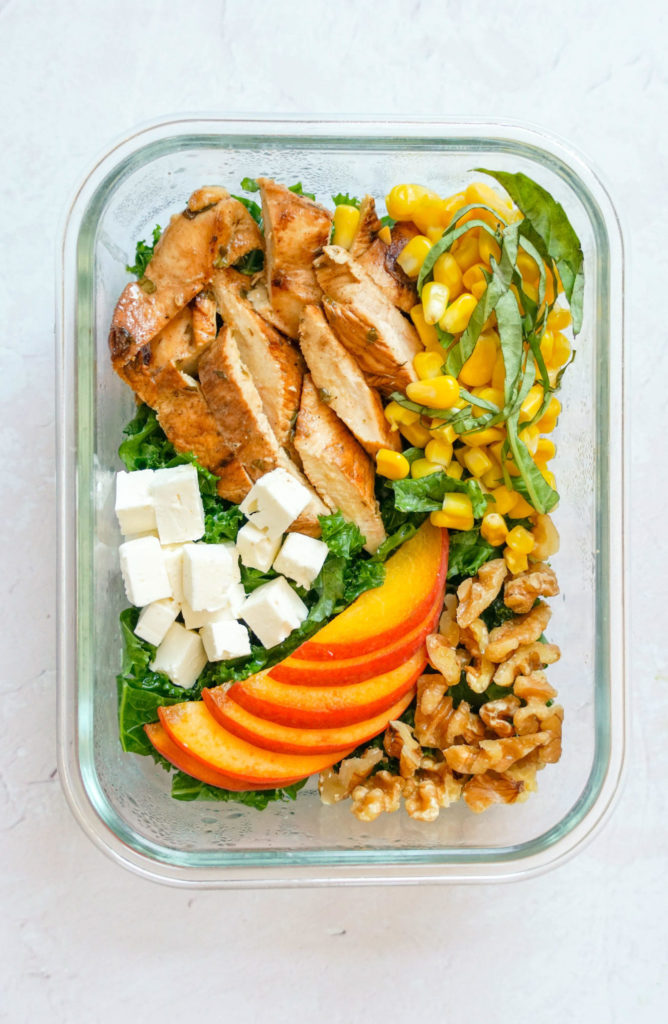
Our Basil Lime Chicken and Peach Kale Salad combines basil-lime chicken with peaches, corn, nuts, cheese, and kale for a salad that is sweet, savory, crunchy, and especially good when peaches are in season.
There is also one tiny meal-prep detail in this recipe that makes a big difference: let the cooked chicken cool before it goes into the container.
Putting piping-hot chicken directly on greens traps steam in the container, and steam is the enemy of good salad texture.
It sounds insignificant, but these are the kinds of small habits that make meal-prepped salads noticeably better a couple of days later.
Keep the dressing separate and add it when you’re ready to eat.
6. Salmon Cobb Salad Meal Prep
Yes, this one contains romaine. Consider it our one lettuce-forward exception.
The Salmon Cobb Salad Meal Prep from Meal Prep on Fleek earns a spot because lettuce isn’t the only thing making the meal interesting. Salmon, eggs, bacon, avocado, tomatoes, and vinaigrette give you enough variety that it feels more like a collection of components than a basic green salad.
Component prep is actually one of my favorite approaches when a traditional “meal prep recipe” sounds exhausting. Cook a protein, prep a few toppings, make a dressing, and assemble.
For the best texture, keep the dressing separate and make sure cooked ingredients are cool before packing them with the romaine.
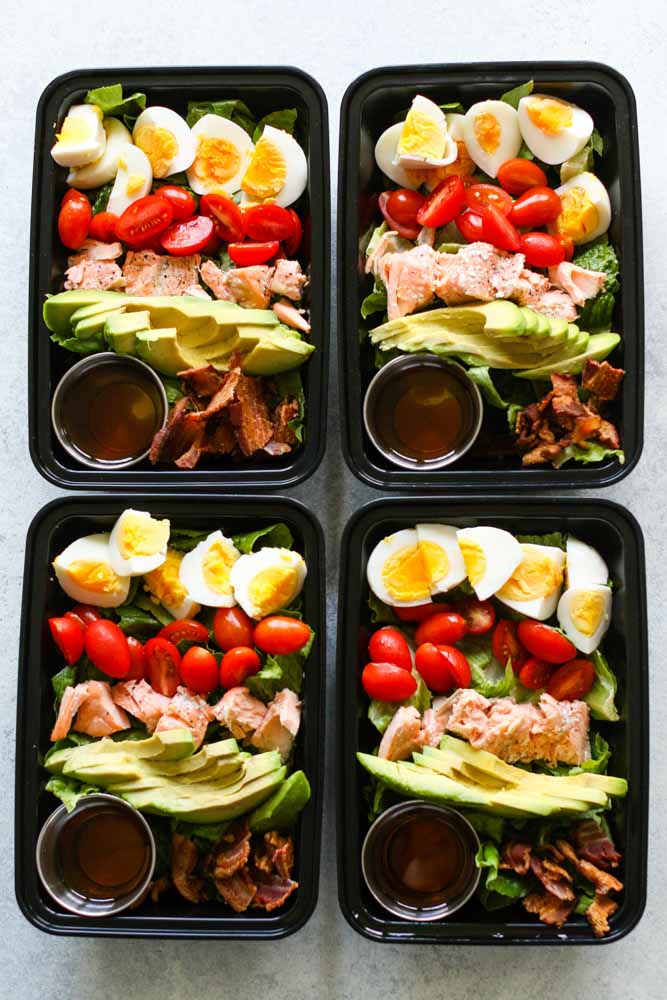
If browned avocado bothers you, add that right before eating. If it doesn’t bother you, prep it ahead and move on with your day. Both are valid approaches.
7. Maple Roasted Kabocha Squash and Quinoa Salad
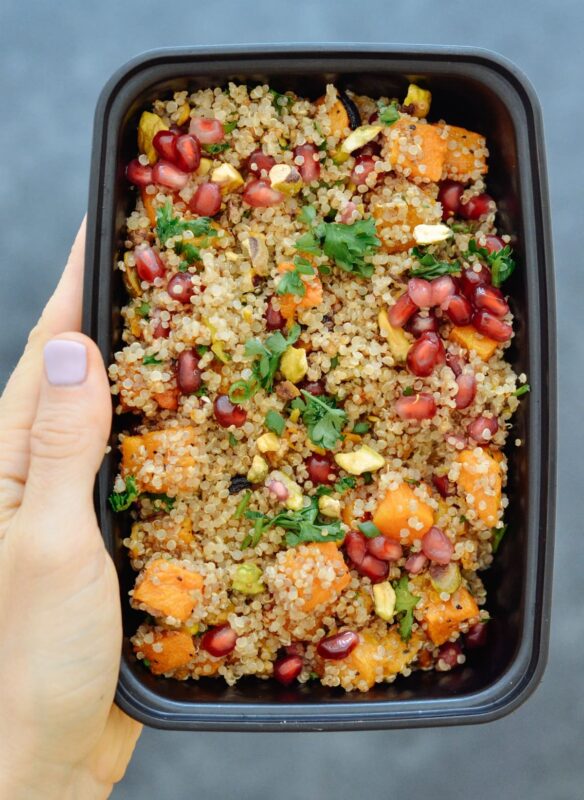
For another salad built around sturdy ingredients, try the Maple Roasted Kabocha Squash and Quinoa Salad from Meal Prep on Fleek.
Kabocha squash and quinoa form the base, while cilantro and pomegranate bring freshness and contrast.
This is the kind of recipe I like during cooler months when a cold bowl of lettuce doesn’t sound remotely appealing but I still want something with different textures and a bright dressing.
It can also work as a side instead of a full lunch. That’s another useful way to think about meal prep: every recipe doesn’t have to become four complete containers. Prep a versatile side once and pair it with whatever else you’re cooking during the week.
8. Vegan Chopped Chickpea Greek Salad
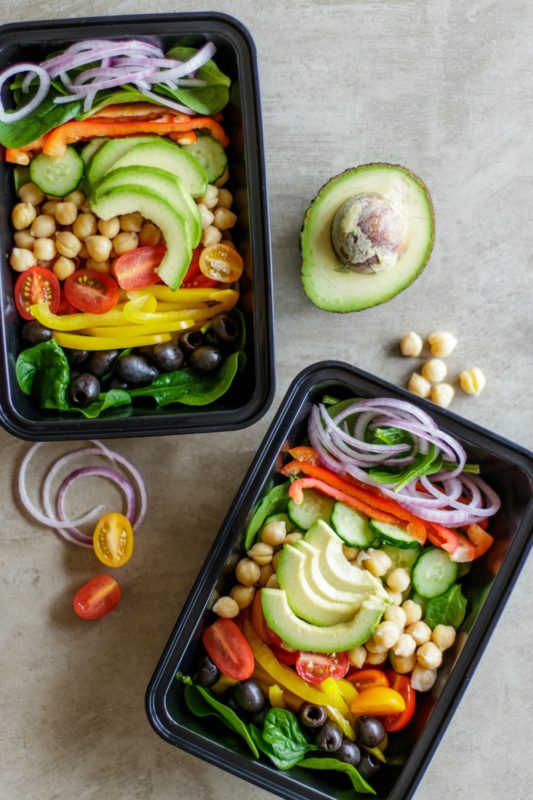
The Vegan Chopped Chickpea Greek Salad Meal Prep from Meal Prep on Fleek combines chickpeas with cucumber, bell pepper, tomatoes, red onion, olives, avocado, spinach, and a balsamic vinaigrette.
Technically there are greens here, but no lettuce—and the chickpeas and chopped vegetables give the salad much more substance and texture than a greens-only bowl.
It’s also a handy option when you don’t feel like cooking. The vegetables and chickpeas come together quickly, and the dressing can be shaken together in a jar.
For meal prep, keep the vinaigrette separate and consider waiting to add avocado until you’re eating the salad.
And if spinach isn’t your thing? The chickpeas and chopped vegetables are doing enough work here that you can easily lean more heavily on those components.
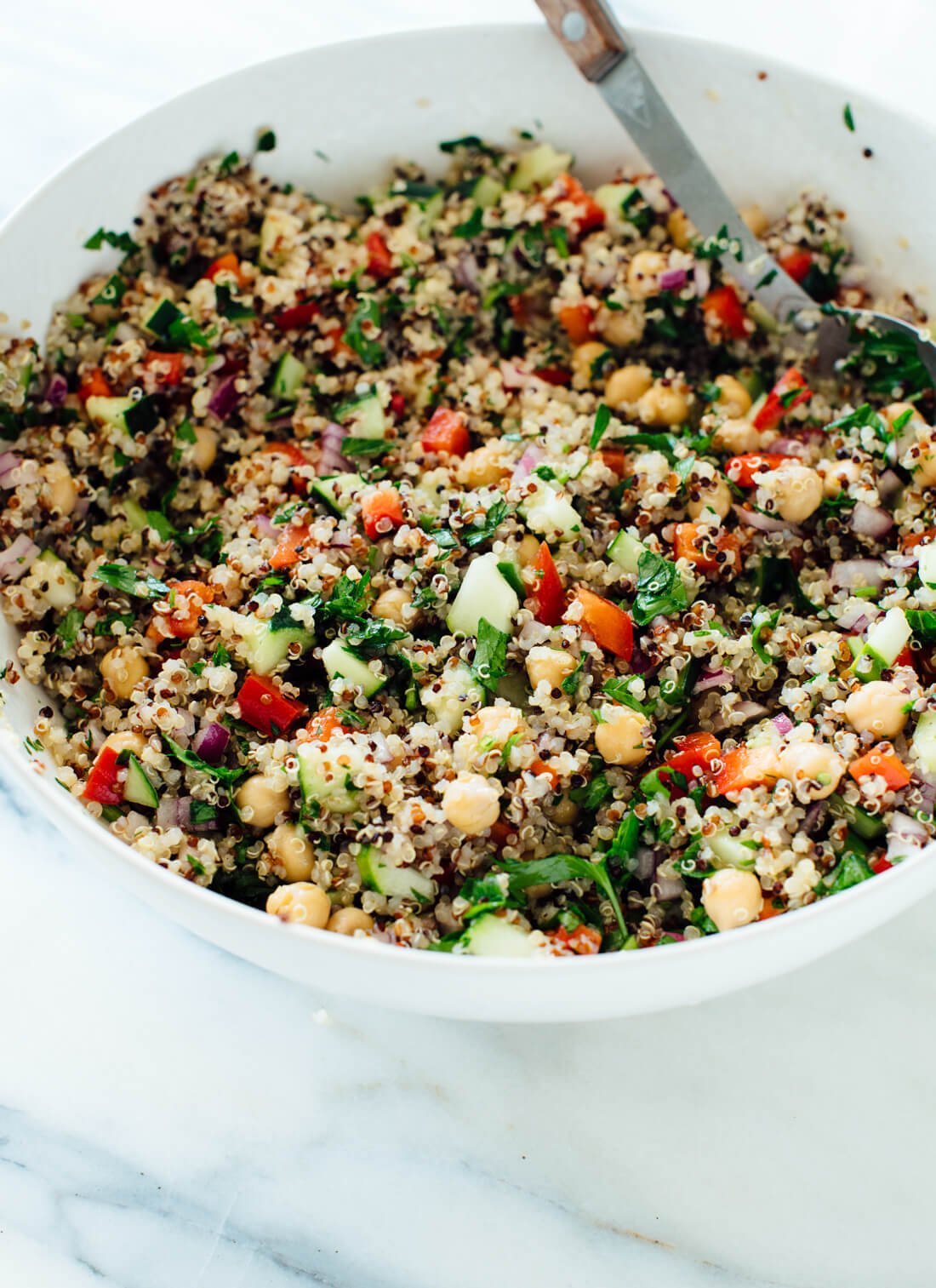
9. Favorite Quinoa Salad from Cookie and Kate
Cookie and Kate’s Favorite Quinoa Salad is exactly the kind of recipe that belongs in a roundup like this.
Quinoa, chickpeas, cucumber, bell pepper, red onion, parsley, lemon, and olive oil make up a bright, crunchy salad that packs well for lunch.
This is also a good template to remember rather than just one recipe to make once.
Start with a cooked grain. Add a bean. Add a few crunchy vegetables. Add herbs. Finish with something acidic and a little fat.
Once you understand that formula, leftover quinoa or grains stop feeling like leftovers and start feeling like tomorrow’s lunch.
10. Cowboy Caviar from Budget Bytes
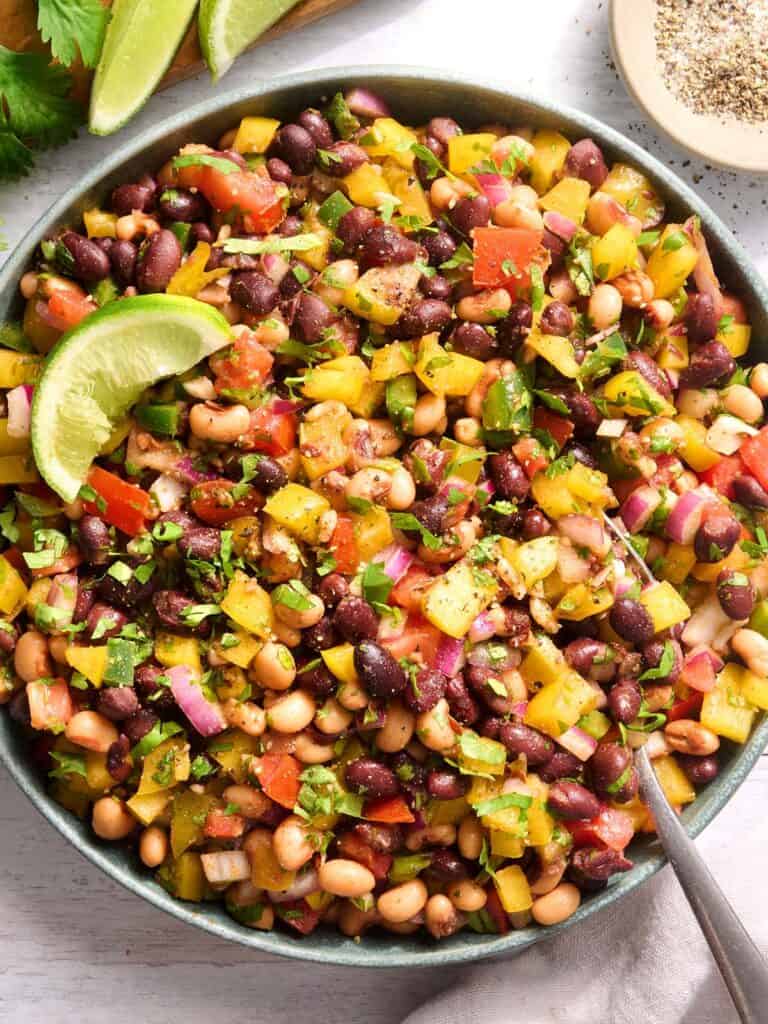
Cowboy Caviar from Budget Bytes is part bean salad, part dip, part taco topping, and exactly the kind of flexible recipe that makes meal prep easier.
It uses black beans and black-eyed peas with crunchy vegetables and a lime dressing. Because most of the ingredients are sturdy, it holds up especially well after it’s mixed.
I love recipes with more than one job. You can eat this as a salad one day, spoon it into tacos the next night, serve it with chips, or add it to a grain bowl.
That’s one of the easiest ways to avoid getting bored with meal prep without cooking more recipes.
If you’re using avocado, add it closer to serving for the best texture.
11. Broccoli Salad from Love and Lemons
Lettuce who?
The Broccoli Salad from Love and Lemons uses raw broccoli with dried cranberries, red onion, roasted almonds, sunflower seeds, and a creamy, tangy dressing.
This recipe is especially interesting for meal prep because sitting in the fridge actually gives the broccoli time to soften slightly and absorb some of the dressing.
That’s the opposite of what happens with many leafy salads.
One mistake I see with non-lettuce salads: assuming every vegetable needs to be cooked first. Raw broccoli brings crunch and structure, especially when it’s chopped into small enough pieces to get some dressing and toppings in each bite.
Make it ahead for lunch, a cookout, or as a side you can pull from for several meals.

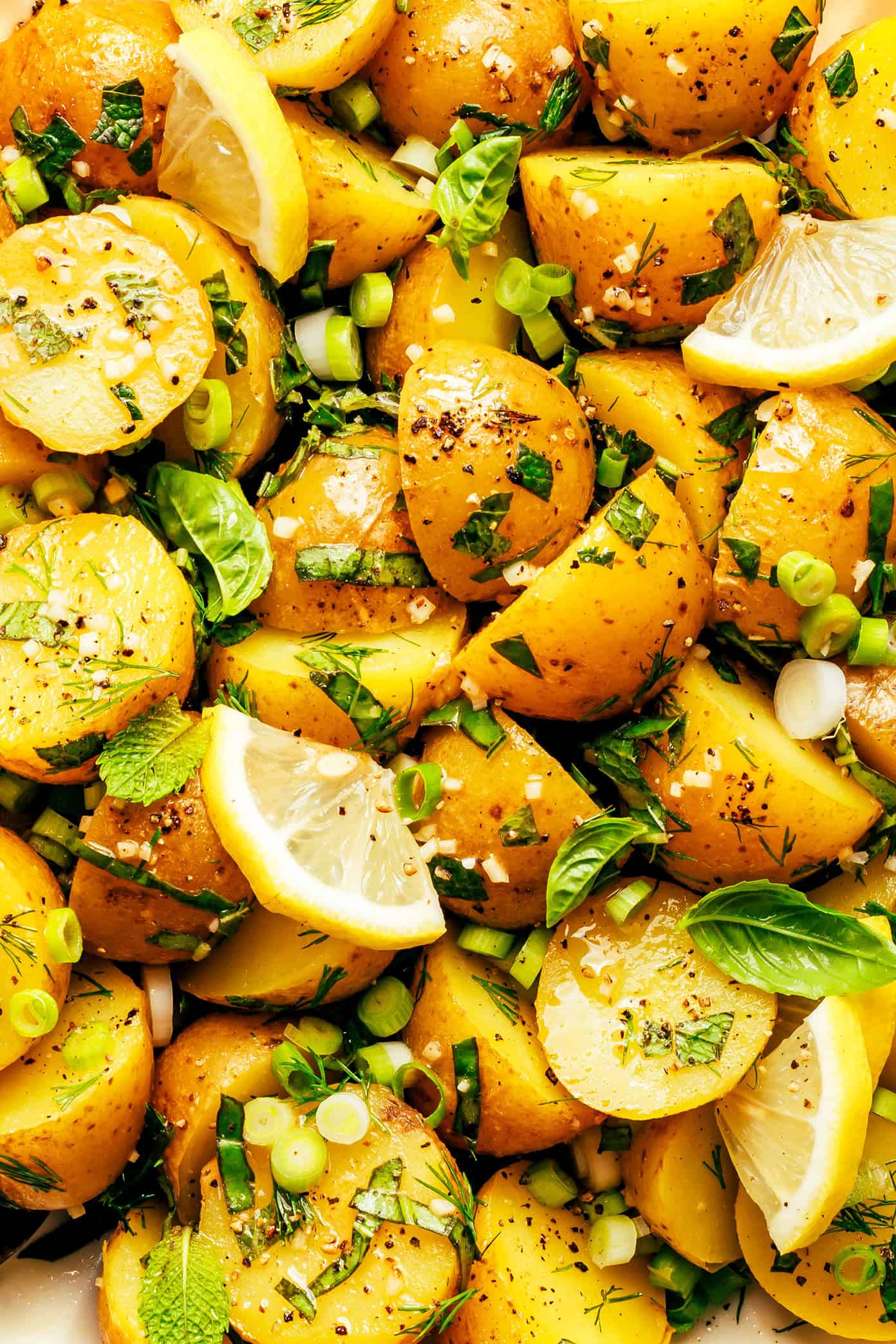
12. Lemon Herb Potato Salad from Gimme Some Oven
Potato salad absolutely counts as salad, and I’m not interested in arguing with anyone about it.
The Lemon Herb Potato Salad from Gimme Some Oven takes a mayo-free approach, tossing tender gold potatoes with scallions, fresh herbs, and a lemon vinaigrette.
The herbs make this taste especially fresh, while the potatoes give it enough substance to work alongside chicken, salmon, veggie burgers, or whatever else is happening for dinner.
One detail worth stealing for other potato salads: dress the potatoes in stages. Adding some dressing while the potatoes are still able to absorb it gives them flavor all the way through instead of leaving all the dressing sitting on the outside.
13. Lentil Salad from Downshiftology
Finally, Downshiftology’s Lentil Salad combines lentils with cucumber, red onion, dates, herbs, and a lemon vinaigrette.
Lentils are one of my favorite foundations for a lettuce-free salad because they’re sturdy, inexpensive, and easy to pair with both sweet and savory ingredients.
There’s also a particularly useful meal-prep lesson in this recipe: if you’re intentionally making lentils several days ahead, cook them just slightly less than you would for immediate eating. They’ll continue softening as they sit in the dressing.
That is exactly the kind of tiny adjustment that turns an okay day-three lunch into one you’re still happy to eat.

The Biggest Mistake I See With Meal Prep Salads
People often focus entirely on keeping the dressing separate.
That’s helpful, but dressing isn’t always the problem.
Temperature and moisture matter just as much.
If you put warm roasted vegetables or freshly cooked chicken into a sealed container with cooler ingredients, you’re trapping steam. If you wash vegetables or greens and pack them while they’re still wet, you’re adding more moisture before the salad even reaches the refrigerator.
I’ve found that letting cooked components cool and thoroughly drying anything you’ve washed does more for the texture of meal-prepped salads than buying a special container ever will.
After that, think about your crunchiest ingredients. Nuts, seeds, croutons, crispy chickpeas, or tortilla strips can go into a separate small container if you really want them to stay crunchy.
But don’t turn lunch into a seven-container project.
Separate what matters. Leave the rest together. Done is better than perfect.
How Long Do Meal Prep Salads Last?
There isn’t one storage rule that fits every salad because the ingredients are different.
As a general food-safety guideline, most cooked leftovers are best used within 3 to 4 days when properly refrigerated. Individual recipes may offer more specific instructions, so follow the recipe guidance when available.
Texture may change before food becomes unsafe, too. A cucumber-heavy salad might get watery, avocado may brown, and crunchy toppings may soften even when everything has been stored correctly.
For the best results:
- Cool cooked ingredients before packing.
- Keep your refrigerator at 40°F or below.
- Store salads in airtight containers.
- Keep dressing separate when the ingredients are prone to getting soggy.
- Add avocado and especially crunchy toppings closer to serving when practical.
- Refrigerate perishable food promptly.
For work lunches, use an insulated lunch bag with a cold source when you won’t have immediate access to a refrigerator.
Can You Freeze Salad?
Usually, I wouldn’t freeze the finished salads in this roundup.
Fresh cucumber, tomato, lettuce, spinach, herbs, avocado, and many dressings can change significantly in texture after freezing and thawing.
But that doesn’t mean your freezer can’t help.
Freeze components instead.
Cooked quinoa, some other cooked grains, roasted squash, and cooked proteins can often be frozen separately and then turned into a fresh salad later.
I use this approach when I want the convenience of freezer meal prep without sacrificing the texture that makes a salad worth eating.
Easy Ingredient Swaps for Non-Lettuce Salads
You don’t have to buy every ingredient a recipe calls for just because it’s on the list.
Think in categories.
Instead of quinoa: try farro, couscous, barley, wild rice, or another grain you already enjoy.
Instead of chickpeas: try white beans, black beans, lentils, or another bean that fits the flavors.
Instead of kale: spinach, cabbage, arugula, or more of the grain or vegetables may work depending on the recipe.
Instead of nuts: try seeds if they work better for your household, or simply leave the crunchy topping out.
Instead of making dressing: use a bottled dressing you already like.
This is one of the biggest lessons I’ve learned from meal prep: substitutions aren’t failures. A recipe that uses ingredients you already have and actually gets made is much more useful than a theoretically perfect version that requires another grocery trip.
When I Wouldn’t Choose a Salad for Meal Prep
Salads aren’t automatically the right meal prep just because they’re easy to portion.
If you know you won’t want cold lunches this week, make something else.
If your schedule means the containers will sit around for six days, prep fewer servings.
If you’re leaving town halfway through the week, don’t make four lunches because that’s what the recipe yield says.
And if chopping seven different vegetables sounds unbearable right now, choose the pasta salad with jarred vegetables instead.
One thing we’ve consistently found at Workweek Lunch is that meal prep works much better when it responds to your actual week instead of an imaginary perfectly organized one.
Sometimes that means making three lunches.
Sometimes it means prepping ingredients instead of meals.
Sometimes it means cooking nothing and buying a rotisserie chicken.
You’re still making future-you’s week easier.
More Meal Prep Salad Ideas
If these recipes are your kind of lunch, you may also like:
- 10 Pasta Salads for No-Reheat Meal Preps
- 8 Best Chicken Salad Recipes
- No-Reheat Meal Prep Recipes
- 25 Lunches for People who Hate Salad
- Dressing Alternatives for People who Hate Mayo
FAQs About Non-Lettuce Salads
What can I put in salad instead of lettuce?
Pasta, quinoa, farro, rice, couscous, lentils, beans, chickpeas, cabbage, broccoli, potatoes, roasted vegetables, kale, and chopped vegetables can all form the base of a salad.
You can also combine several of them. There isn’t a rule that says a salad has to have one obvious base ingredient.
What salads are good for meal prep?
Look for salads made with sturdy ingredients such as pasta, grains, beans, lentils, cabbage, broccoli, kale, roasted vegetables, nuts, and seeds.
If a recipe contains delicate greens or crunchy toppings, keeping the dressing or toppings separate can help preserve their texture.
How do I keep meal prep salad from getting soggy?
Start with dry ingredients and cool cooked ingredients completely before packing them. Then separate whichever ingredient poses the biggest texture risk—usually dressing, crunchy toppings, avocado, or very juicy produce.
You don’t necessarily have to store every component separately.
Can I eat these salads cold?
Many of them are designed to be eaten cold or at room temperature, which is part of what makes them so convenient for packed lunches.
The squash-and-grain salads can also be enjoyable slightly warm if that’s what sounds better.
Do I have to meal prep these on Sunday?
Absolutely not.
Meal prep doesn’t care what day it is.
Prep Monday night, Wednesday afternoon, twice a week, or whenever you have the time and energy. You can also make one recipe during dinner and intentionally cook enough to create a few lunches at the same time.
The schedule that actually fits your life is the useful one.
Final Thoughts
If salads have started to feel synonymous with containers of lettuce, consider this permission to make the category much bigger.
Pasta can be salad. Lentils can be salad. Potatoes can be salad. Quinoa, beans, broccoli, roasted squash, peaches, chicken, and salmon can all show up too.
More importantly, you don’t have to prep a week’s worth.
Pick one recipe that sounds good, make enough for a few meals, and leave some room for plans to change.
Future you still gets lunch.
That’s the win.

Leave a Reply