

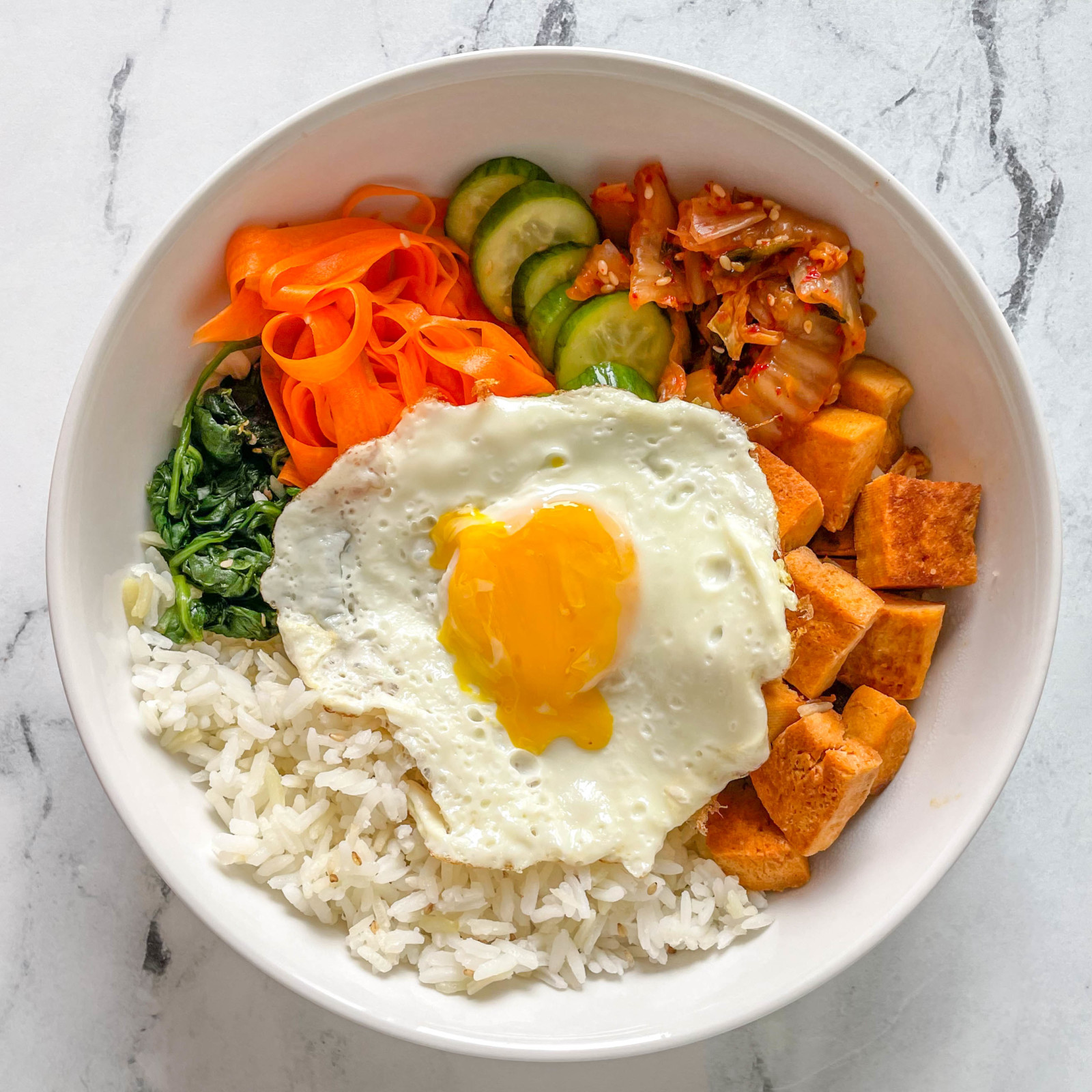
Have you had bibimbap before? My first experience was in Japan at a Korean restaurant, and it became one of the most memorable meals of my trip. Bibimbap bowls are a traditional Korean dish with assorted toppings all mixed together, often including gochujang (spicy bean paste), kimchi (fermented cabbage), assorted veggies, and a fried egg… making it extremely customizable.
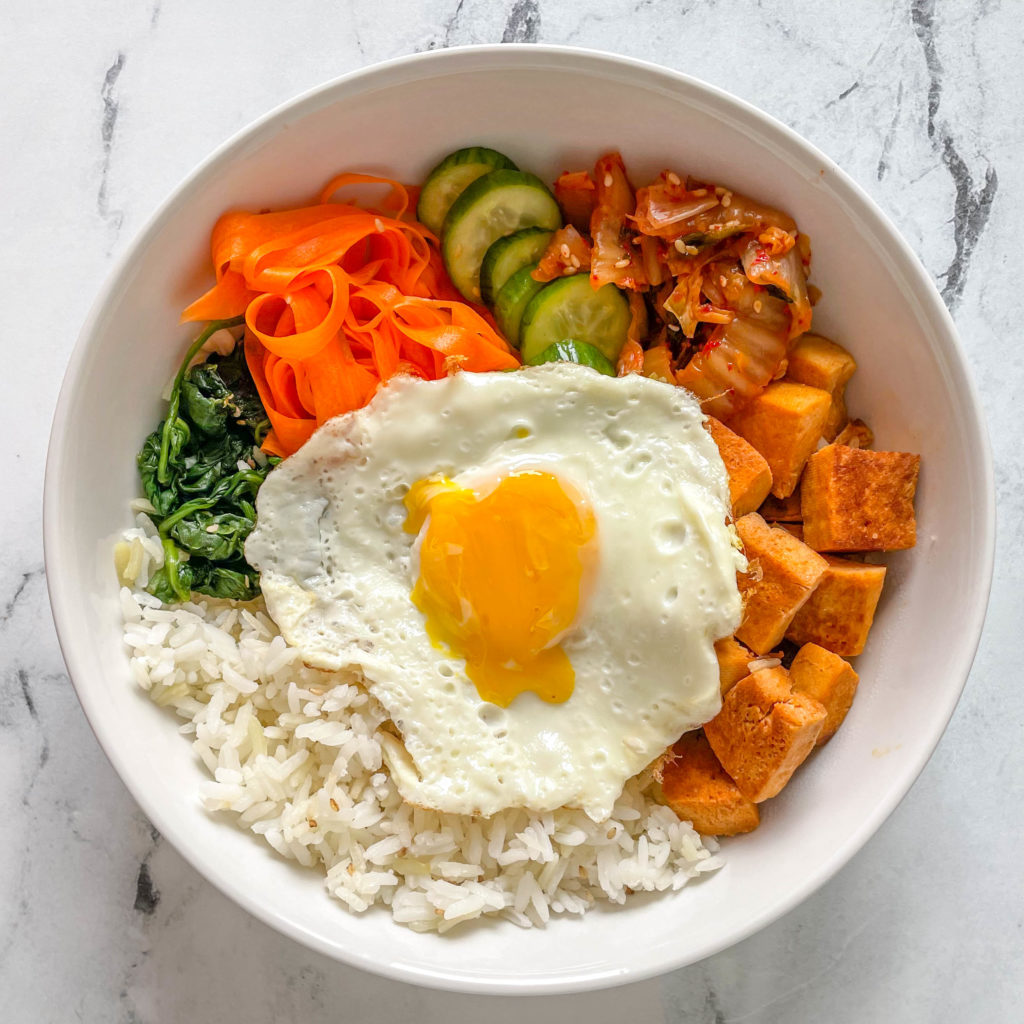
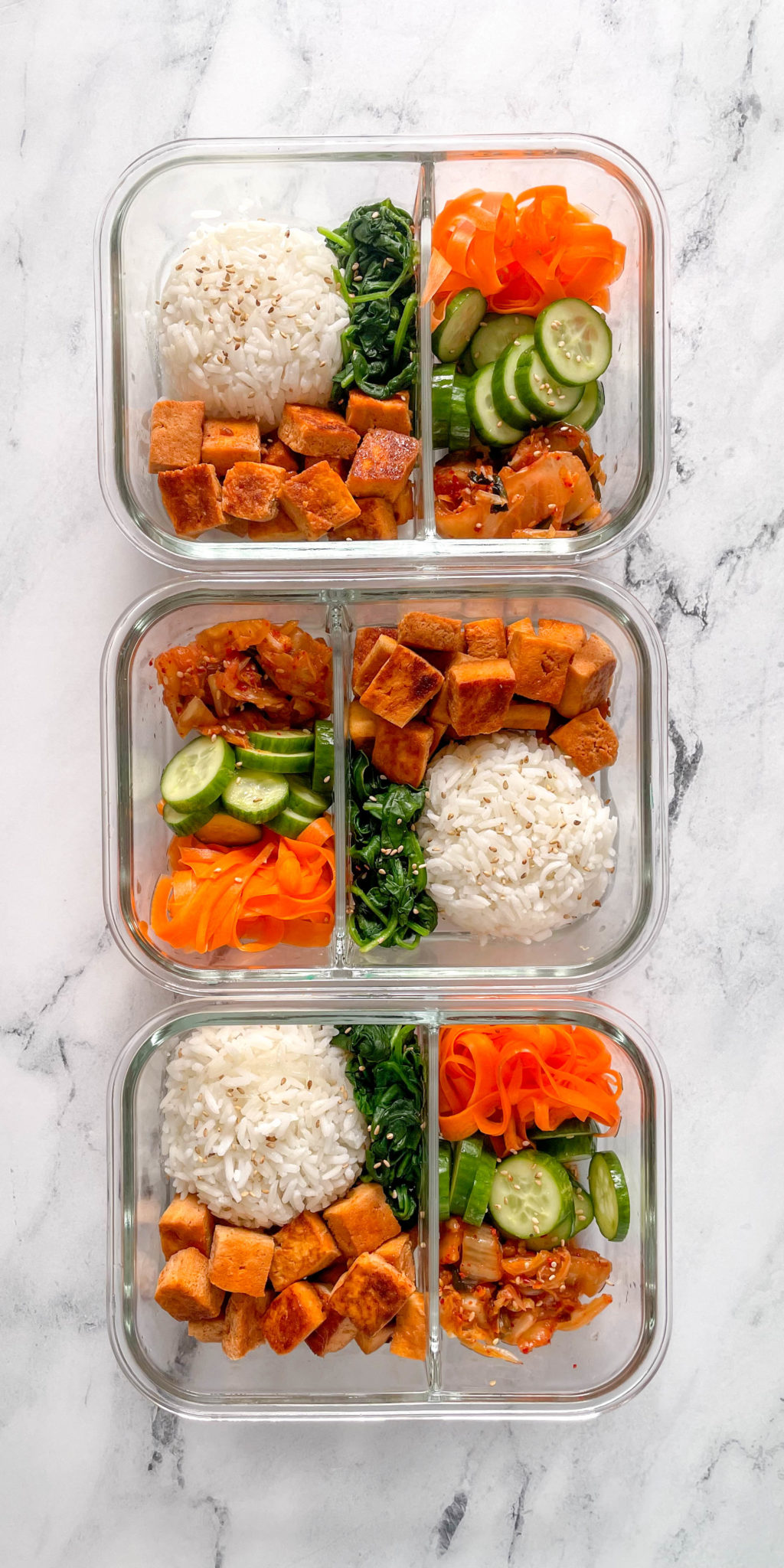
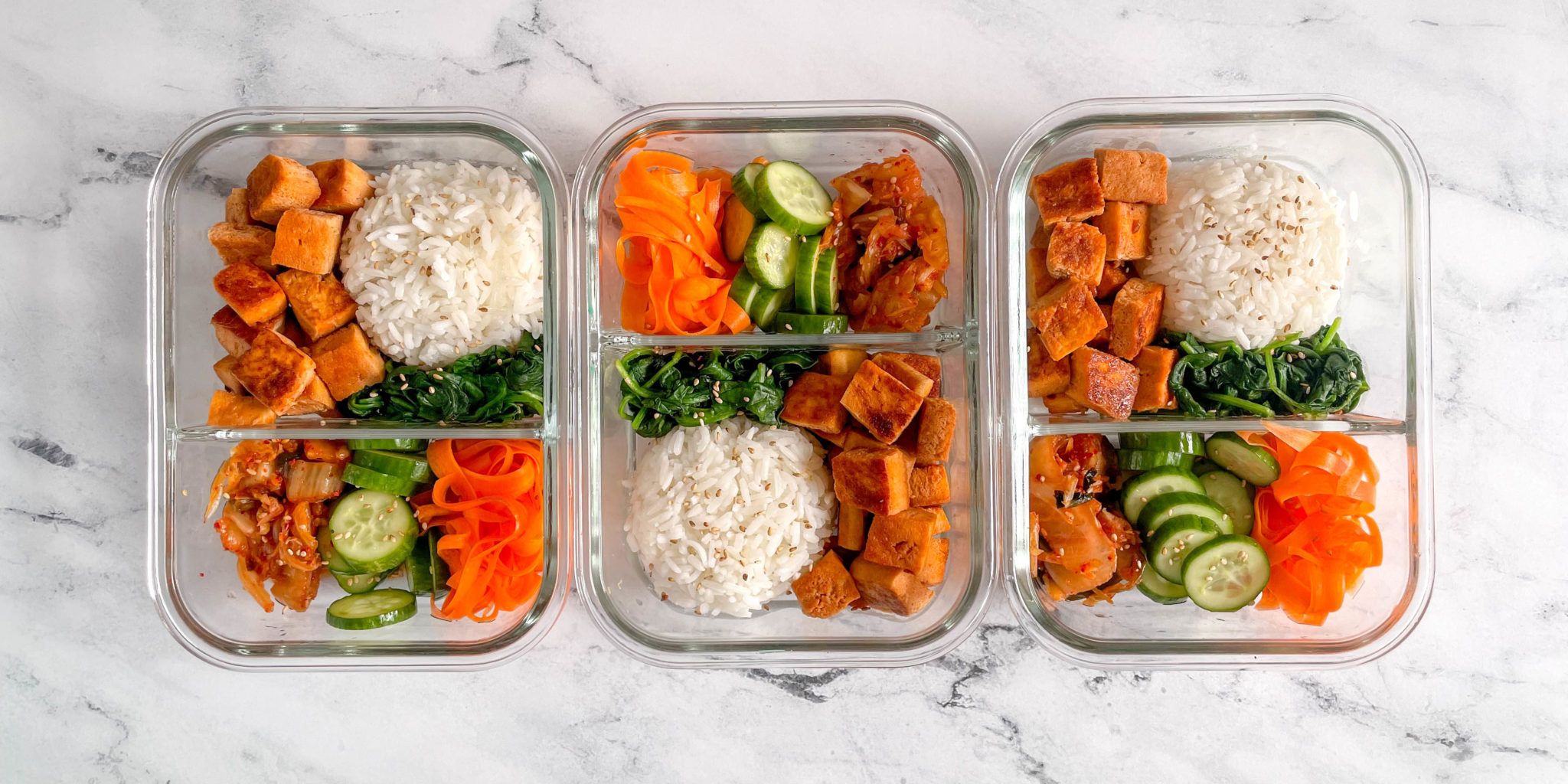
Our meal prep take on bibimbap features quick-pickled cucumbers, carrots, sautéed spinach, tofu, and rice. An egg is optional—just make sure to cook it fresh before eating.
👉 Get hundreds of recipes like this in the Workweek Lunch Meal Prep Program, complete with grocery list generators and weekly planning tools. Start your free trial today!
A Note on Authenticity
Our version is not meant to be an authentic bibimbap bowl—it’s our interpretation of the dish for meal prep! For a traditional recipe, check out Hyosun of Korean Bapsang’s version (linked below).
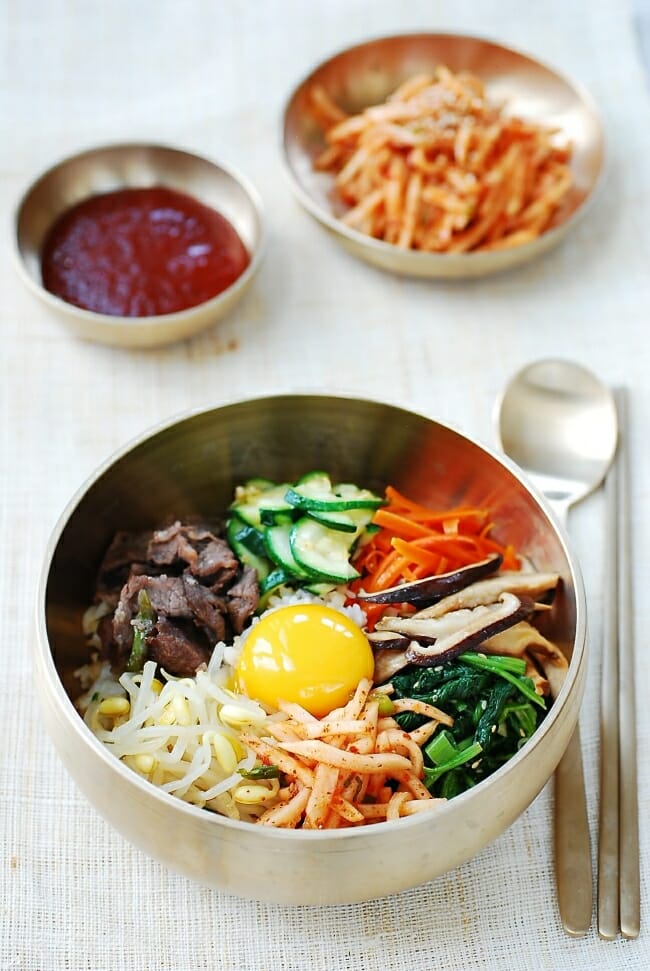
Bibimbap (비빔밥) is a large bowl of rice topped with an array of individually prepared vegetables and meat and served with a gochujang(고추장) sauce. Bibim means mixing, and bap means rice.
Hyosun, Korean Bapsang, Check out her traditional bibimbap bowl here
How to Make These Bibimbap Bowls Your Own
Protein Options:
- Vegetarian: Tofu, tempeh, seitan, or plant-based crumbles
- Meat-based: Ground beef (traditional), chicken, or pork
Base Options:
- Alternatives: Quinoa, farro, noodles, or even a wrap for a sandwich twist
- Classic: White rice (short grain is ideal)
Veggie Options:
- If you’re not into pickled veggies, keep them raw
- Add-ons: Scallions, edamame, shiitake mushrooms, avocado, red cabbage, bell pepper, jalapeño, or zucchini noodles
Egg (Optional):
- Want perfect boiled eggs? [Check out my egg boiling test video here]
- Cook eggs fresh—sunny side up is traditional, but boiled works too
Related: 8 International Recipes to Try at Home (When You Can’t Travel)
A note on kimchi
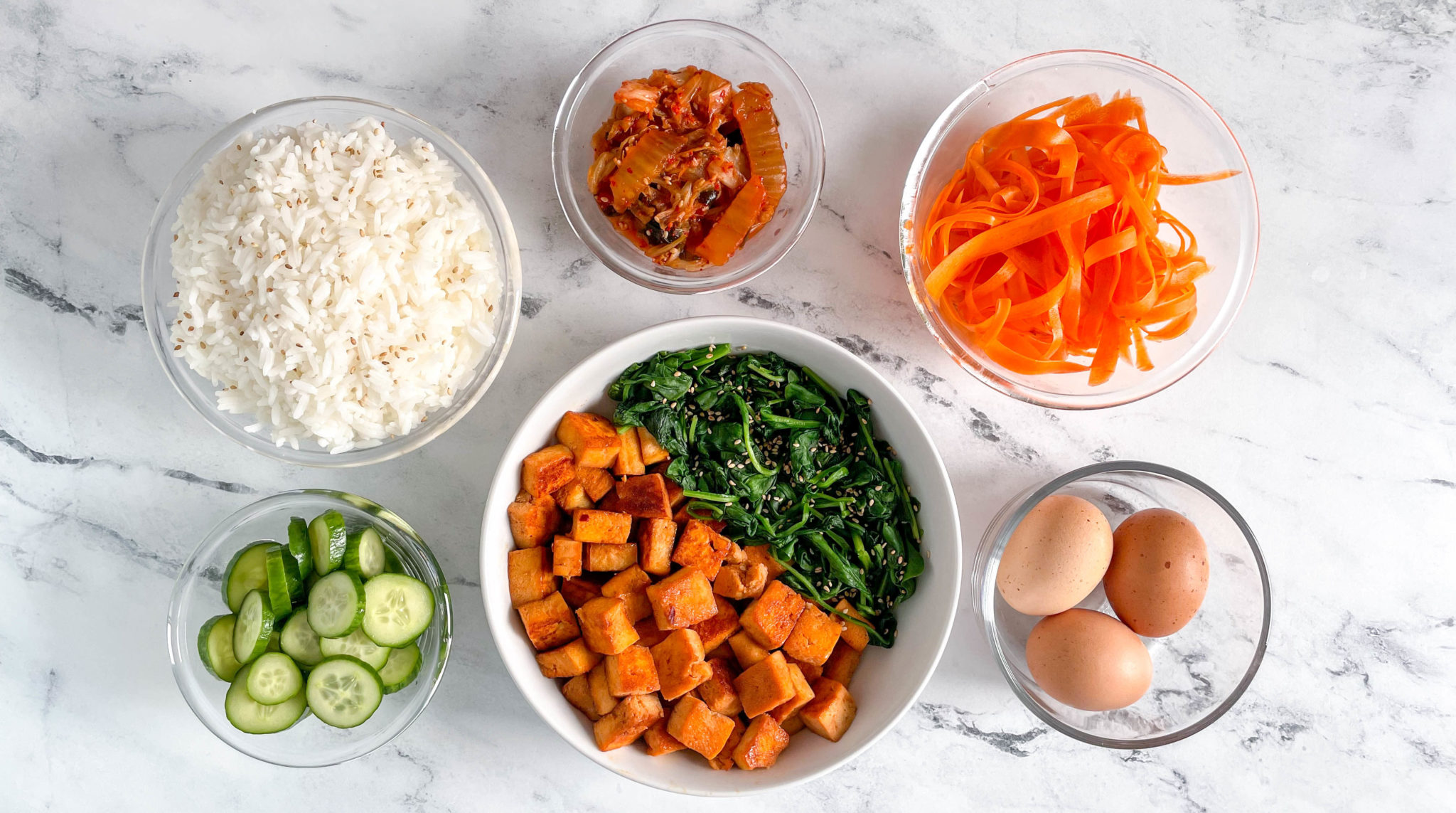
Not all kimchi is vegan or vegetarian! Make sure to check the ingredients – if it’s made with oyster sauce or fish sauce, it’s unfortunately not vegan/vegetarian.
What is a stone bowl and do you need one for bibimbap?
Bibimbap is traditionally served in a stone bowl (dolsot). The heat gives the bottom layer of rice a bit of a crisp and warms the rest of the bowl when it is mixed!
If you are interested, you can buy one here, or you can use your cast iron skillet for a similar outcome!
Storage and Reheating Notes
- Store components separately if possible. Reheat rice, protein, and spinach only.
- Keep carrots, kimchi, and cucumbers cold or room temp until serving.
- Cook eggs fresh when you plan to eat.
- Lasts up to 4 days in the fridge.
- Not freezer-friendly.
Why These Bowls Work for Meal Prep
Bibimbap bowls are a meal prep dream: they’re customizable, colorful, and make it easy to pack lots of veggies into your diet. By keeping some ingredients reheated and others fresh, you get a meal that feels vibrant and satisfying, even days later.
This is exactly the type of meal you’ll find in the Workweek Lunch Meal Planner: balanced, flexible, and built for real life. If you’re tired of boring lunches, bibimbap bowls are proof that meal prep can be exciting and delicious.
Happy prepping!
Frequently Asked Questions
Is bibimbap always vegetarian?
No, traditional bibimbap usually includes ground beef or another protein, but it’s very easy to make vegetarian with tofu or tempeh.
Can I make this vegan?
Yes! Omit the egg and use vegan-friendly kimchi and protein like tofu or tempeh.
What’s the best rice for bibimbap?
Short-grain white rice is most traditional, but jasmine rice, brown rice, or quinoa also work.
How do I keep the veggies fresh?
Store pickled and raw veggies separately from cooked components. Add them right before eating.
Can I meal prep bibimbap for lunch?
Definitely! Just keep the egg and any delicate veggies separate until you’re ready to eat.
Check out these other delicious Korean recipes!
And don’t forget to try our other delicious vegetarian/vegan meal prep recipes!
- Veggie Pesto Pasta With Chickpeas (No-Reheat!)
- Grilled Veggie Hummus Wraps
- Easy, Vegan Tofu Scramble for Meal Prep
- Pineapple Fried Rice with Peas, Red Pepper and Tofu
- Vegetarian Meatballs Made With Chickpeas and Miso
Tofu Bibimbap Bowls With All The Toppings
Ingredients
For the base
- 2 TBSP sriracha
- 1/4 cup soy sauce use liquid aminos if gluten-free
- 2 TBSP agave sub maple syrup
- 1 tsp lime juice
- 1 tsp hoisin sauce leave out if gluten-free
- 14 oz package of firm tofu drained, chopped into cubes
- 1 TBSP olive oil
- 3/4 cup rice any rice works
- 1/4 tsp salt
- 1.5 cup water
For the toppings
- 2 carrot chopped into matchsticks or peeled into ribbons
- 1 cucumber sliced
- 1 TBSP rice vinegar
- 2 tsp granulated sugar
- 1/4 tsp crushed red pepper skip if you don’t like heat
- 1 TBSP olive oil
- 6 cup spinach sub kale or chard
- 1/2 tsp sesame oil
- 2 tsp sesame seeds optional for garnish, add more as needed
- 3 eggs optional, to be cooked fresh with the meal
- 1 cup kimchi optional, note not all kimchi is plant based

Instructions
- Prepare the tofu: combine the sriracha, soy sauce, agave, lime juice and hoisin in a measuring glass. Add the tofu to a big bowl and pour the sauce over it. Toss gently to coat and set aside.
- Cook the rice: Add the rice and water to a pot over high heat with a pinch of salt and bring it to a boil. Then cover and reduce heat and let it simmer for 10 minutes, then turn off the heat and let the rice steam. No peeking or stirring!
- Cook the tofu: Heat up a non-stick skillet for 2-3 minutes. Add the olive oil and let it warm up for a minute or two. Add the seasoned tofu to the pan and cook for 10-15 minutes, turning the tofu pieces occasionally, until it’s crispy and darker in color. Optional step: Put tofu on a greased baking sheet and bake at 400 F for 15-20 minutes to make tofu even crispier.
- Prepare the cucumber: toss the sliced cucumber with rice vinegar, sugar and red pepper flakes with a pinch of salt. Set aside.
- Prepare the spinach: heat up the same pan you used to cook the tofu. Add the olive oil and spinach with a pinch of salt. Saute over medium-low heat until it has completely wilted, about 6-8 minutes. Covering the pan helps steam spinach nicely. Turn the heat off and add the sesame oil. Gently toss to coat the spinach. Set aside.
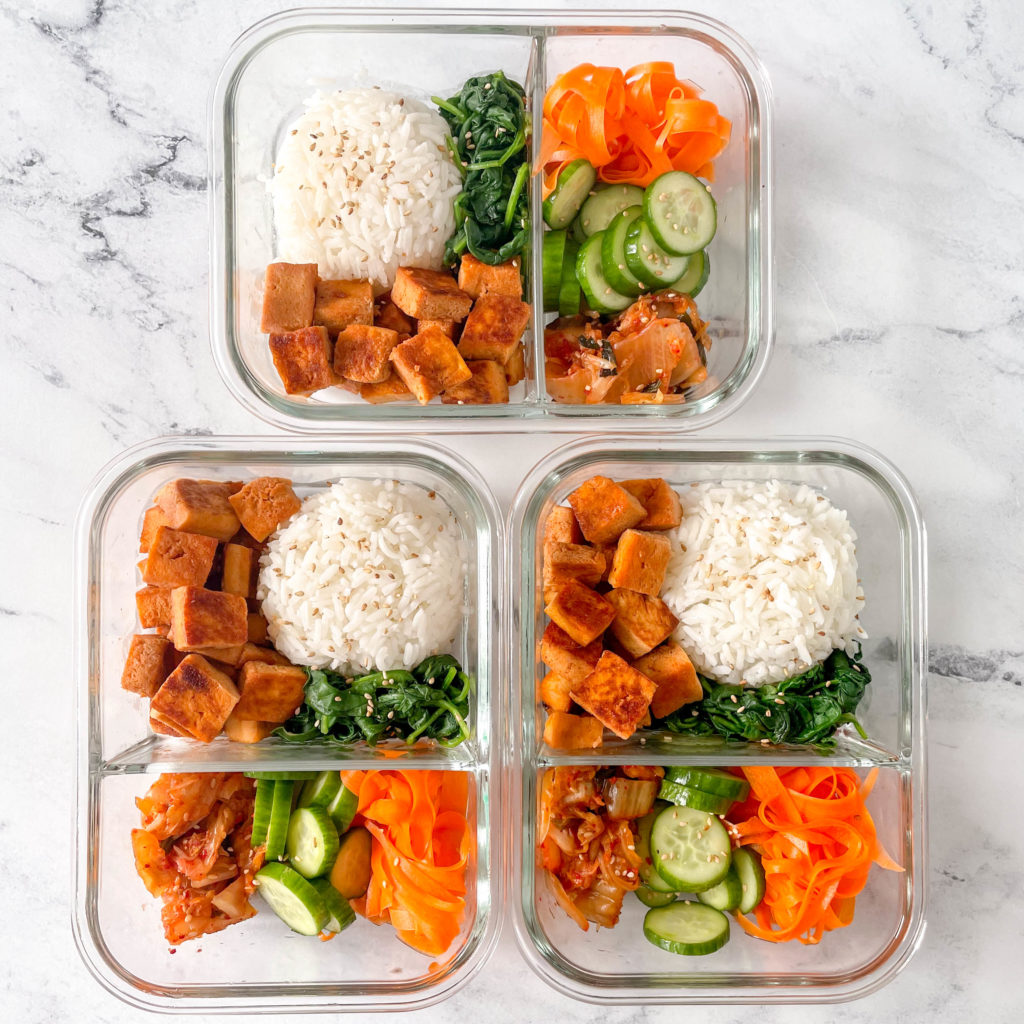
- Assemble! Divide the rice and tofu between three meal prep containers. Garnish with sesame seeds if using. In another container or in a few small containers, store the carrots, cucumber, spinach and kimchi. I stored the spinach with the meat and rice because it was cooked and would taste good warm. When ready to eat, cook the egg to your preference (sunny side up is ideal! boiled works too) and add the other prepared toppings to your bowl.


Leave a Reply